

Street Lighting Inventory for Your Municipality
We will create or update your municipality’s public lighting inventory. You’ll gain an overview of every light fixture, as well as documentation for maintenance, modernization, and grants.
How many streetlights are there in your town? What types of light fixtures do you use, what is their power consumption, and how old are they? And which street is powered by which distribution panel? If you have to look through several spreadsheets, old drawings, or rely on the maintenance technician’s memory to find the answers, it’s time to create a public lighting inventory.
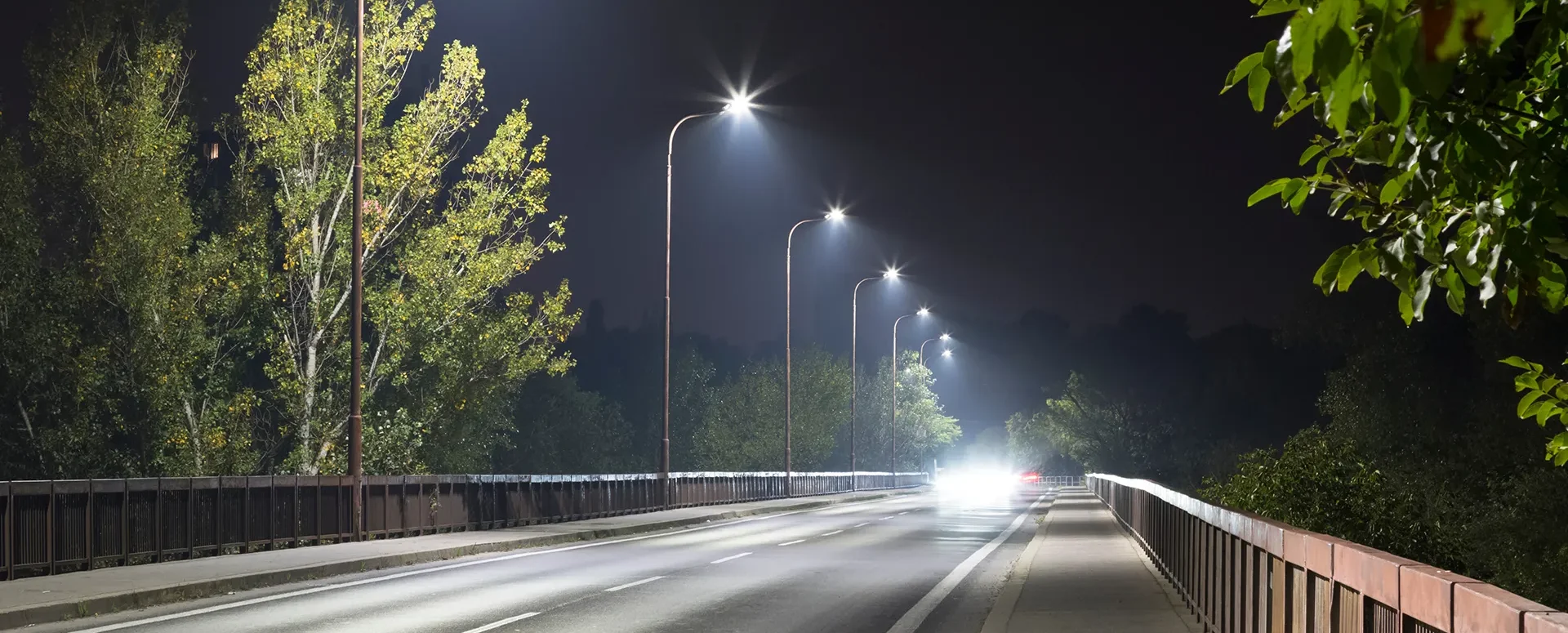
According to the Building Act No. 283/2021 Coll., public lighting is considered a technical infrastructure facility, and the municipality is responsible for ensuring its safe and proper condition. It is practically impossible to fulfill this obligation without up-to-date records—the municipality must know what it manages, where it is located, and what condition it is in. A public lighting inventory is an essential tool for this purpose.
A passport that isn't sitting in a drawer
Street lighting is constantly changing. Light fixtures are being replaced, wiring is being repaired, new lighting points are being added, and the power supply to individual branches is being modified. If these changes are not reflected in the inventory records, the records will no longer reflect reality.
That is why we will not only create a new public lighting inventory, but we can also update (revise) the existing one and help you keep it in line with the actual conditions well into the future.
What Is Included in a Public Lighting Passport?
With a digital passport, you have all the important information clearly organized in one place:
- the location and number of light points and light fixtures on the map,
- the type and height of the pole, the type, number, and wattage of the lights, the year of installation, and the serial numbers,
- switching points (distribution panels) – identification number, circuit breaker size, and switching method,
- line routes, including length, type, and material,
- devices mounted on poles (public address systems, cameras, traffic radars),
- photographic documentation and records of repairs and inspections.
How a Passport Is Made
We'll take care of the entire process for you:
- We will use surveying techniques to map the locations of light fixtures, switch points, and the routes of above-ground and underground lines (we will locate underground routes using a detector).
- We also use laser scanning and photogrammetry for large-scale data collection.
- We will process the data and import it into the MawisGeoportal application or into the geographic information system that the municipality already uses.
- We will review the final technical specifications with you and also provide them as an SHP file and spreadsheets (XLS, PDF).
All we need from you is to define the area you manage, provide access to the distribution panels, and cooperate in locating the necessary data.
Overview of the Current Status of the Network
When creating or updating the lighting inventory, we verify the location of each light fixture, its designation, technical specifications, and connection to the distribution panel. This ensures that every light fixture is in the correct position, has the correct number, and is assigned to the correct switch.
In practice, this means that in just a moment, you can determine which lights are connected to a specific distribution panel and which part of the municipality will be affected by a malfunction or a planned outage.
Guidelines for Administration, Maintenance, and Working with Suppliers
Maintenance of public lighting is often handled by an outside contractor. With its own asset register, the municipality has its own data on its assets and can clearly identify what needs to be repaired or replaced. The contractor then uses the same records as the owner, and any changes can be recorded immediately.
With an up-to-date passport, you can:
- schedule regular maintenance and inspections,
- keep a record of malfunctions and repairs to individual light fixtures,
- check the scope of the work performed,
- assess the validity of the billed expenses,
- Prepare a budget for the management of public lighting.
All data on the MawisGeoportal online map
We will provide you with the map in the MawisGeoportal online mapping application, which is accessible from anywhere via a web browser. There, you can:
- display street lighting fixtures and their characteristics, including photographs,
- edit and update the records themselves,
- filter items based on selected criteria and export them to XLS, SHP, or print,
- schedule maintenance,
- share data with colleagues, a maintenance contractor, or the public.
You can then view the public lighting data alongside the real estate cadastre, the zoning plan, and other inventories—such as those for local roads or green spaces. This greatly facilitates the planning of comprehensive street renovations.
Link to the Digital Technical Map
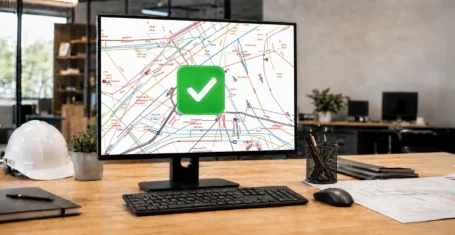
Street lighting is part of a municipality’s technical infrastructure and is therefore included in the Digital Technical Map. We will prepare the inventory data for you in the Unified Exchange Format for the Digital Technical Map (JVF DTM), so that it can be used directly for submission to the regional DTM.
Regular updates to the cadastral register also make it possible to verify that the records correspond to reality and to the data in the digital map layers.
Basis for Subsidies
An up-to-date public lighting inventory is a required document for a grant application to modernize the public lighting system, typically to replace outdated fixtures with energy-efficient LEDs.
You can easily find the information you’ll need to prepare your application in the technical specifications: the number and types of light fixtures, their age and power consumption, and their connections to individual distribution panels. The higher the quality and more up-to-date your data is, the easier it will be to prepare the grant project and carry it out.
In addition, the technical report serves as a reliable basis for the designer, so there is no need to reassess the condition of the system.
Sample Solution and Additional Information
Street lighting is changing. But your maintenance record can remain up to date.
We would be happy to give you a no-obligation overview of how a streetlight inventory could work in your municipality and demonstrate its specific practical benefits.
👉 MawisPasport – Street Lighting
If you're interested in a consultation or a proposal tailored specifically to your municipality, please contact me.
Miroslava Kubíčková | +420 602 477 250 | miroslava.kubickova@hrdlicka.cz
Digital Campus – We're Launching a New Service
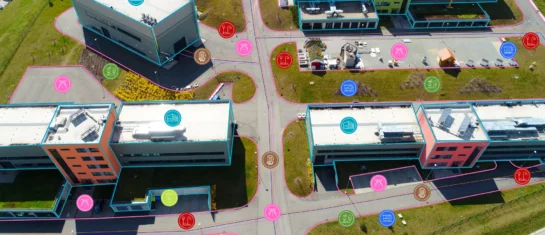
A digital site, precisely surveyed and clearly documented. All data on the site’s assets in one place in the MawisGeoportal app.

A Cemetery Guide for Your Community
We can create or update your cemetery inventory. Contact us and we’ll discuss the next steps.
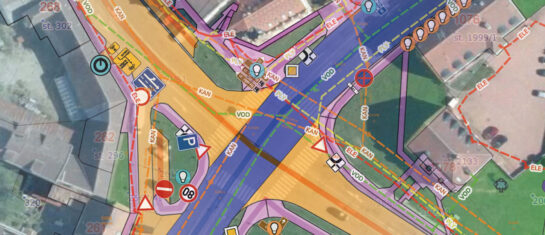
Property records are used to manage the assets of each municipality
MawisPasport helps with planning investments, maintenance, and financing, and makes it possible to simplify and streamline the management of municipal assets.